Thursday, January 21, 2010

Plug-in hybrid hype gets zapped

CNN Money
December 15, 2009

by Peter Valdes-Dapena, CNNMoney.com senior writer

NEW YORK (CNNMoney.com) -- If you want to save big money on fuel and create a cleaner environment by buying a new, hot off the production line plug-in hybrid, you'd better hold your horses.

For at least a couple of decades, plug-in hybrid vehicles are likely to cost too much for drivers to earn any financial benefit, according to a government advisory group.
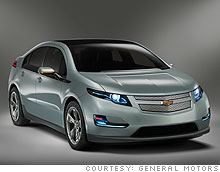

2011_chevy_volt.03.jpg
Despite travelling miles without gasoline, cars like the Chevy Volt are unlikely to have a big impact on the nation's fuel consumption.

High battery costs are the main culprit, according to a National Research Council report.

Also, Americans shouldn't expect a big environmental impact from these vehicles even if they're very successful with consumers, the report said.

Among plug-in hybrids, those that rely more on gasoline and less on electric power, like Toyota's planned Prius plug-in, are expected to become cost-effective sooner for consumers. That's because of the high cost of the lithium-ion batteries required for these cars. The farther a car is expected to drive on electricity alone, the larger, and more expensive, its battery pack will have to be.

Fuel savings won't cover the extra battery cost unless gas prices rise sharply, the report said. That extra cost will have to be offset somehow, either by passing it on to consumers or by providing higher government incentives to car buyers, or both.

A car like General Motors' Chevrolet Volt, which is expected to travel 40 miles on a fully charged battery before burning gasoline, won't be cost effective for new car buyers until 2040, assuming gasoline prices don't rise above $4 a gallon, the report said. The Volt is expected to go on sale in late 2010.

On the other hand, a car like Toyota's planned plug-in Toyota Prius, which is expected to travel only 10 miles on electricity before burning gasoline, is expected to become cost effective for buyers before 2030. The Prius plug-in is due to hit the market in 2011.

Representatives of GM, Toyota, Ford (F, Fortune 500) and other companies provided information used in the report.

In order to help these vehicles gain market acceptance in the meantime, the government will need to spend "tens to hundreds of billions of dollars" in subsidies to generate sales of these vehicles. The Volt, for instance, will be eligible for a $7,500 federal tax credit which will help bring its expected $40,000 sticker price down to about $32,000. Bigger government incentives than that may still be needed, according to the NRC report.

The extra cost to build a car like the Volt, compared to a similarly sized gasoline-only car, is expected to be about $18,000 according to the NRC. Of that, $14,000 is for the battery pack alone. A car like the plug-in Prius would cost about $6,300 extra to produce, including $3,300 for the battery pack. Added to that, some homes will require electrical system upgrades to charge the vehicle, work that will add about $1,000 to consumers' costs, the report said.

GM spokesman Rob Peterson called the NRC's estimates of battery cost "bloated," saying the Volt's battery would cost much less than that. Battery costs will also come down quickly, he said.

"Our starting point, which already costs much less than they estimate, is just the first step," he said.

Bill Reinert, Toyota's national manager for advanced technology, took less issue with report, saying its conclusions were generally correct.

"As a general rule, society has not really looked through all the issues (with plug-in cars)," he said.

Ultimately, the goal of reducing fuel use and cleaning the air will be reached through a combination of technologies, including improved internal combustion engines and advanced bio-fuels, he said.

Higher gas prices or faster-than-expected reductions in battery costs could shorten the time it takes for these cars to become cost effective and decrease the amount of government incentives needed sell them, the report said.

Competing against gasoline power One of the biggest challenges facing plug-in hybrid cars will be the continued improvement of ordinary, non-hybrid vehicles.

The Chevrolet Equinox SUV, already on the market, gets 32 miles per gallon on the highway and the Chevrolet Cruze compact car, due out around the same time as the Volt, is expected to get 40 mpg. Both will cost thousands less than the Volt and will carry more passengers and cargo.

Also, those cars won't need to be plugged in.

"Some people will probably look at that as something they don't want to have to do," said Jim Katzer, an MIT researcher and one of the reports' authors.

Even given optimal expectations of 40 million plug-in hybrids in a fleet of 300 million, they will have relatively little impact on the nation's fuel consumption before 2030.

"You've got tremendous inertia in the existing fleet that's got to be turned off," Katzer said.

Improvements in green house gas and other emissions will take much longer because of the higher emissions of the typical American power generating plant, the report said.

"As long as you have the grid as it is now, and you don't clean it up, you don't save a lot," Katzer said To top of page


Scientists confirm link between BPA and heart disease in humans

Grist

January 13, 2010

smoking_gunThe FDA's new report on the safety of endocrine-disrupting chemical bisphenol A is months overdue and there is still no sign of when or if the agency will release the report. Perhaps they are waiting for that piece of "smoking gun" evidence that BPA represents a clear and present danger to human health? Well, thanks to researchers from Peninsula College of Medicine in Britain, we just may have it.

In 2008, the group looked at data from the 2003-2004 US National Health and Nutrition Examination Survey (NHANES) which included urinary BPA levels for the first time. The results:

[A] quarter of the population with the highest levels of BPA were more than twice as likely to report having heart disease or diabetes, compared to the quarter with the lowest BPA levels. They also found that higher BPA levels were associated with clinically abnormal liver enzyme concentrations.

At the time, even the researchers admitted the possibility that it was a statistical fluke. But the same team has now analyzed the 2005-2006 NHANES, which used an entirely different group of people, and guess what? The association between BPA exposure and heart disease in humans is as strong as ever (via Toronto's Globe and Mail):

According to the new research, 60-year-old American males with the highest amounts of bisphenol A in their urine had about a 45 per cent greater risk of cardiovascular disease than men the same age with lower exposures, confirming the results of a previous study on the topic released in 2008 and based on a different sample of people.

This comes despite the fact that median BPA levels dropped by 30 percent between 2004 and 2006 to around 2 parts per billion. Even with the lower exposure, however, odds of heart disease were still significantly higher. Note that the researchers performed rigorous calculations to ensure that they isolated the effect of bisphenol A and weren't getting correlations with other factors (you can dig into the statistics here).

It's true that the earlier relationship between BPA and diabetes and BPA and liver function were less present in the new data. But Dr. David Melzer, the lead author on the study, believes this is a result of the lower human BPA levels measured. As he put it to me:

The 2005/6 data for the liver enzymes and diabetes are also statistically consistent with the 2003/4, although not significant on their own, probably because of the fall in BPA levels. Note that the new data do not statistically contradict the 2003/4 data on diabetes or liver enzymes: overall they add to it although the sample size is too small at these lower BPA levels to get a definitive result for 2005/6 on its own.

Overall this clearly takes the hypothesis of a BPA—adult heart disease association through to the level of evidence. Given the obvious concern that BPA might be directly driving these health effects, we now need to urgently clarify the mechanisms behind these associations.

Indeed, Dr. Melzer believes his study is underestimating the effect of BPA due to the relatively small sample size—he believes further study will revise the effect of BPA on heart disease upward.

The Globe and Mail article offered this response from a spokesman for industry lobbying group the American Chemistry Council:

"The study itself does not establish a cause-and-effect relationship between BPA exposure and heart disease," commented Steven Hentges, a spokesman for the group.

But what he doesn't say is that the only way to "prove" that cause-and-effect, in other words to isolate BPA's role beyond doubt, would involve conducting a controlled clinical trial, i.e. exposing humans to BPA and seeing who dies. That, of course, isn't science, it's homicide, which is why toxic chemical research is mostly performed on rats. And the evidence from rats on BPA, despite industry attempts at obfuscation, is already overwhelming.

These kind of population studies—analysis in effect of the natural experiment industry is performing on us—represents the best evidence we could reasonably hope to get. These results go far beyond what's required by any meaningful precautionary principle. This is now about saving lives. Yes, as the scientists observe, more research is needed to understand the precise physiology through which BPA causes heart disease and to determine the risk factor with greater accuracy. But whether that increased risk end up at 30 percent or 60 percent or somewhere inbetween, the FDA now knows all it needs to know to conclude that even low exposure to BPA represents a serious risk to human health.

Tuesday, January 19, 2010

Climate Results for 2009 - tied for 2nd Hottest Ever

Daily Kos
January 17, 2010

Hide and Seek

It may seem odd considering how cold it's been in the US recently, and it won't shut down the denial industry for a second, but annual climate data is now in and word is NASA GISS will place 2009 as tied for the second hottest year since modern temperature records have existed. For the southern hemisphere, 2009 was the hottest year ever:

The United States may be experiencing one of the coldest winters in decades, but things continue to heat up in the Southern Hemisphere. Science has obtained exclusive data from NASA that indicates that 2009 was the hottest year on record south of the Equator. The find adds to multiple lines of evidence showing that the 2000s were the warmest decade in the modern instrumental record.

The data is particularly worrisome because it happens at a time when the sun is in a deep solar minimum, or coolest point, in its eleven-year cycle (Solar output only changes by an average of less than one-tenth of one percent over the period, but that small change can still add up when it's distributed over the entire earth's surface for a year or more). The inference being as the sun inevitably swings back toward the maximum, all time record hot years in the near future are sure to follow. A few climate scientists are even predicting that 2010 will be such a year.

Regardless of how 2010 turns out, climate change skeptics are now presented with a problem: The graphs above show how 2009 fits in with the rest of the modern record. The hollow square in the blow up on the right represents 2009. Recall that skeptics widely celebrated the small downtick between 2007 and 2008 as evidence of dramatic global cooling. Consistency would then demand that the 2008 - 2009 uptick, which happens to be slightly greater than the former, represents dramatic warming. That would be a poor interpretation, one year does not a trend make. The point is moot anyway since consistency is not exactly valued by the denial industry. But deception is their bread and butter.

Possum Comitatus has a great write up of one such shenanigan recently used by some loudmouthed Australian skeptics which should really be enjoyed in its entirety:

[A] a lot of this pseudo-statistical arsehattery that gets passed off as evidence in any climate change debate (or any debate that contains numbers and lots of politics, sadly) tends to come from the loudest voices involved in that debate.... which also generally happen to be the most ignorant.

The gist of it involves a quantity used in stats called a moving average. All you need to understand here is that a simple moving average (SMA) tends to smooth out fluctuations on a graph, the average lags the actual data, and the longer the period of the moving average the more the data is smoothed out and the greater the lag. They're particularly popular among technical stock and futures traders as shown left by my friends at LearnForExPro.

Now, let's say you're a climate change denier, and you've been waving around a chart showing a moving average touting it as evidence for global cooling. Odds are you've cooked the average to get the best picture you can already. But now, all the sudden, new data comes in and when you put it into your chart it reverses the trend you've been embellishing. What to do? Why, lengthen the moving average of course! Make it a longer period until it smooths out and lags the new data so much that the chart jives with your cooling trend bias! Possum Comitatus makes a persuasive argument that that's exactly the kind of cooked graph one mealy mouthed denier named Andrew Bolt is trying to exploit.

The irony: not only has Bolt made a habit of shooting his mouth off about his inerrant self-awarded expertise -- despite having no formal scientific training in any field of science whatsoever -- for the past month he and his pals took a few words from some stolen emails wildly out of context and brandished them as evidence for a climate change conspiracy. The words that Bolt and company objected to the most as evidence for such a conspiracy happen to be "trick ... to hide the decline." I kid you not.


Exclusive: 2009 Hottest Year on Record in Southern Hemisphere

Science Now Daily News
January 13, 2010

By Eli Kintisch

The United States may be experiencing one of the coldest winters in decades, but things continue to heat up in the Southern Hemisphere. Science has obtained exclusive data from NASA that indicates that 2009 was the hottest year on record south of the Equator. The find adds to multiple lines of evidence showing that the 2000s were the warmest decade in the modern instrumental record.

Southern Hemisphere temperatures can serve as a trailing indicator of global warming, says NASA mathematician Reto Ruedy of the Goddard Institute for Space Studies in New York City, given that that part of the globe is mostly water, which warms more slowly and with less variability than land. Ruedy says 2009 temperatures in the Southern Hemisphere were 0.49°C warmer than the period between 1951 and 1980, with an error of +/- 0.05°C.

That makes 2009 the warmest year on record in that hemisphere. That's significant because the second-warmest year, 1998, saw the most severe recorded instance in the 20th century of El Niño, a cyclic warming event in the tropical Pacific. During El Niño events, heat is redistributed from deep water to the surface, which raises ocean temperatures and has widespread climatic effects. But last year was an El Niño year of medium strength, which Ruedy says might mean that the warmer temperatures also show global, long-term warming as well as the regional trend.

The data come a month after announcements by the National Oceanic and Atmospheric Administration (NOAA) and by the World Meterological Organization that the decade of the 2000s was warmer than the 1990s. (NOAA estimates that the decade was 0.54°C warmer than the 20th century average. The 1990s, by comparison, was 0.36°C warmer by their measure.)

Meanwhile, NOAA is expected to announce possible record highs in the tropics when it releases its final report on 2009 temperatures on Friday. "This is one of the coldest winters we've experienced in a while up here in the northern latitudes," says Derek Arndt of NOAA's National Climatic Data Center in Asheville, North Carolina. "But we're piling up a lot of heat in the tropics."


Thursday, January 14, 2010

Groups Sue To Stop New Mexico From Capping Greenhouse Gas Emissions

Huffington Post
January 14, 2009

ALBUQUERQUE, N.M. — New Mexico's largest utility, three state lawmakers and other industry groups filed a lawsuit Wednesday to stop New Mexico regulators from adopting a cap on greenhouse gas emissions.

The lawsuit in state district court targets New Energy Economy, a group that has filed a petition with the state Environmental Improvement Board to adopt regulations that would reduce global warming pollution over the next decade.

The group maintains the board has the authority under existing law to implement statewide limits on greenhouse gas emissions.

Public Service Company of New Mexico, El Paso Electric Co., Tri-State Generation and Transmission Association, the lawmakers and other plaintiffs filed their lawsuit in Lea County.

The lawsuit challenges the board's authority to regulate greenhouse gas emissions and asks the court to order the board not to conduct further administrative proceedings on New Energy Economy's proposal.

"We feel very strongly that the issue of greenhouse gas emissions and climate change is a national and global issue and should be addressed at that level. We're concerned about the potential of a patchwork of state requirements that may disadvantage some states over others," said Don Brown, spokesman for Public Service Company of New Mexico, or PNM.

If the board established a cap on greenhouse gas emissions, Brown said PNM believes the cap "would increase the cost of living and doing business in New Mexico."

New Energy Economy filed its petition with the Environmental Improvement Board at the end of 2008. Several motions have been filed since then, including one seeking to dismiss the petition. The board denied that motion and has scheduled a public comment session for March 1.

The U.S. Environmental Protection Agency declared in December that there was compelling scientific evidence that global warming from manmade greenhouse gases endangers Americans' health. The agency also determined that the pollutants – mainly carbon dioxide from burning fossil fuels – should be regulated under the Clean Air Act.

Gov. Bill Richardson said Wednesday in a statement that he does not want to wait for Congress to pass comprehensive climate legislation that would limit the pollution.

"We have an obligation to reduce greenhouse gas emissions and protect the environment, and I am prepared to do that. New Mexico will take the lead on this issue," the governor said.

John Fogarty, executive director of the New Energy Economy, said the group's petition has gained the support of many in the medical and business communities.

"It is critical that we move forward to address what is quickly becoming the most important public health problem that society faces. If the federal government isn't going to act, it's going to be incumbent upon states and municipalities to act," he said.

Fogarty, a Santa Fe physician, said the Legislature established the Environmental Improvement Board to ensure the safety of New Mexico's water supply and air quality and to avoid public nuisances. He said greenhouse gas emissions have become a public nuisance.

Brown said even if New Mexico set a cap on the pollution, it would not impact global greenhouse gas concentrations.

"Without caps elsewhere, it does not benefit the environment in a way that is intended," Brown said.

The lawsuit also argues that before the Environmental Improvement Board can regulate emissions of a particular contaminant, state law requires it must establish a standard for which the contaminant, in this case greenhouse gas emissions, is considered "air pollution." The EIB has not done that.

Other plaintiffs include Sens. Carroll Leavell, R-Jal, and Gay Kernan, R-Hobbs; Rep. Donald Bratton, R-Hobbs; the New Mexico Oil and Gas Association; Dairy Producers of New Mexico; the New Mexico Rural Electric Cooperative Association; the New Mexico Farm & Livestock Bureau; and the New Mexico Petroleum Marketers Association.


Monday, January 4, 2010

Use of potentially harmful chemicals kept secret under law

Washington Post
January 4, 2010


Washington Post Staff Writer

Of the 84,000 chemicals in commercial use in the United States -- from flame retardants in furniture to household cleaners -- nearly 20 percent are secret, according to the Environmental Protection Agency, their names and physical properties guarded from consumers and virtually all public officials under a little-known federal provision.

The policy was designed 33 years ago to protect trade secrets in a highly competitive industry. But critics -- including the Obama administration -- say the secrecy has grown out of control, making it impossible for regulators to control potential dangers or for consumers to know which toxic substances they might be exposed to.

At a time of increasing public demand for more information about chemical exposure, pressure is building on lawmakers to make it more difficult for manufacturers to cloak their products in secrecy. Congress is set to rewrite chemical regulations this year for the first time in a generation.

Under the 1976 Toxic Substances Control Act, manufacturers must report to the federal government new chemicals they intend to market. But the law exempts from public disclosure any information that could harm their bottom line.

Government officials, scientists and environmental groups say that manufacturers have exploited weaknesses in the law to claim secrecy for an ever-increasing number of chemicals. In the past several years, 95 percent of the notices for new chemicals sent to the government requested some secrecy, according to the Government Accountability Office. About 700 chemicals are introduced annually.

Some companies have successfully argued that the federal government should not only keep the names of their chemicals secret but also hide from public view the identities and addresses of the manufacturers.

"Even acknowledging what chemical is used or what is made at what facility could convey important information to competitors, and they can start to put the pieces together," said Mike Walls, vice president of the American Chemistry Council.

Although a number of the roughly 17,000 secret chemicals may be harmless, manufacturers have reported in mandatory notices to the government that many pose a "substantial risk" to public health or the environment. In March, for example, more than half of the 65 "substantial risk" reports filed with the Environmental Protection Agency involved secret chemicals.

"You have thousands of chemicals that potentially present risks to health and the environment," said Richard Wiles, senior vice president of the Environmental Working Group, an advocacy organization that documented the extent of the secret chemicals through public-records requests from the EPA. "It's impossible to run an effective regulatory program when so many of these chemicals are secret."

Of the secret chemicals, 151 are made in quantities of more than 1 million tons a year and 10 are used specifically in children's products, according to the EPA.

The identities of the chemicals are known to a handful of EPA employees who are legally barred from sharing that information with other federal officials, state health and environmental regulators, foreign governments, emergency responders and the public.

Last year, a Colorado nurse fell seriously ill after treating a worker involved at a chemical spill at a gas-drilling site. The man, who later recovered, appeared at a Durango hospital complaining of dizziness and nausea. His work boots were damp; he reeked of chemicals, the nurse said.

Two days later, the nurse, Cathy Behr, was fighting for her life. Her liver was failing and her lungs were filling with fluid. Behr said her doctors diagnosed chemical poisoning and called the manufacturer, Weatherford International, to find out what she might have been exposed to.

Weatherford provided safety information, including hazards, for the chemical, known as ZetaFlow. But because ZetaFlow has confidential status, the information did not include all of its ingredients.

Mark Stanley, group vice president for Weatherford's pumping and chemical services, said in a statement that the company made public all the information legally required.

"It is always in our company's best interest to provide information to the best of our ability," he said.

Behr said the full ingredient list should be released. "I'd really like to know what went wrong," said Behr, 57, who recovered but said she still has respiratory problems. "As citizens in a democracy, we ought to know what's happening around us."

The White House and environmental groups want Congress to force manufacturers to prove that a substance should be kept confidential. They also want federal officials to be able to share confidential information with state regulators and health officials, who carry out much of the EPA's work across the country.

Walls, of the American Chemistry Council, says manufacturers agree that federal officials should be able to share information with state regulators. Industry is also willing to discuss shifting the burden of proof for secrecy claims to the chemical makers, he said. The EPA must allow a claim unless it can prove within 90 days that disclosure would not harm business. Meanwhile, the Obama administration is trying to reduce secrecy.

A week after he arrived at the agency in July, Steve Owens, assistant administrator for the EPA's Office of Prevention, Pesticides and Toxic Substances, ended confidentiality protection for 530 chemicals. In those cases, manufacturers had claimed secrecy for chemicals they had promoted by name on their Web sites or detailed in trade journals.

"People who were submitting information to the EPA saw that you can claim that virtually anything is confidential and get away with it," Owens said.

The handful of EPA officials privy to the identity of the chemicals do not have other information that could help them assess the risk, said Lynn Goldman, a former EPA official and a pediatrician and epidemiologist at the Johns Hopkins Bloomberg School of Public Health.

"Maybe they don't know there's been a water quality problem in New Jersey where the plant is located, or that the workers in the plant have had health problems," she said. "It just makes sense that the more people who are looking at it, they're better able to put one and one together and recognize problems."

Independent researchers, who often provide data to policymakers and regulators, also have been unable to study the secret chemicals.

Duke University chemist Heather Stapleton, who researches flame retardants, tried for months to identify a substance she had found in dust samples taken from homes in Boston.

Then, while attending a scientific conference, she happened to see the structure of a chemical she recognized as her mystery compound.

The substance is a chemical in "Firemaster 550," a product made by Chemtura Corp. for use in furniture and other products as a substitute for a flame retardant the company had quit making in 2004 because of health concerns.

Stapleton found that Firemaster 550 contains an ingredient similar in structure to a chemical -- Di(2-ethylhexyl) phthalate, or DEHP -- that Congress banned last year from children's products because it has been linked to reproductive problems and other health effects.

Chemtura, which claimed confidentiality for Firemaster 550, supplied the EPA with standard toxicity studies. The EPA has asked for additional data, which it is studying.

"My concern is we're using chemicals and we have no idea what the long-term effects might be or whether or not they're harmful," said Susan Klosterhaus, an environmental scientist at the San Francisco Estuary Institute who has published a journal article on the substance with Stapleton.

Chemtura officials said in a written statement that even though Firemaster 550 contains an ingredient structurally similar to DEHP does not mean it poses similar health risks.

They said the company strongly supports keeping sensitive business information out of public view. "This is essential for ensuring the long-term competitiveness of U.S. industry," the officials said in the statement.

Staff researcher Madonna Lebling contributed to this report.


Recycling centers fall victim to California's budget woes

Contra Costa Times
January 1, 2010

Refund Recycle Center employee Raul Lopez helps Pam Scerbo of Livermore turn almost a year's...

Folks who redeem cans and bottles for a little extra jingle in their pockets or simply to help save the planet are finding fewer recycling centers open for business.

Contra Costa County has lost nine beverage redemption sites in the past six months, and Alameda County has seen a net loss of six. Others have reduced their days and hours.

Lafayette and Moraga's sole centers shut down in November. Walnut Creek has lost two of its three sites, and Oakley and San Ramon residents have one instead of two.

Two of Berkeley's three recycling centers have closed since October. Livermore lost two of its three facilities last month.

The state's major recycling center operators blame the closures and service cuts on the state's continued budget-balancing raids on its bottle fund.

The state has in the past several years borrowed more than $400 million from the California Beverage Container Recycling Fund, the proceeds of the nickel and dime deposits consumers pay on aluminum cans, plastic and glass bottles.

The fund ran out of money and on Nov. 1 stopped paying a recycling material handling fee, about half of the redemption center operators' income.

Hayward resident Jennifer Bittikofer, who dropped off $33.92 worth of recyclables at Union City's lone redemption center last week, was unhappy to hear of closures. She uses her recyclable redemption cash for food.

"I'm a starving college student," said Bittikofer, a former Cal State East Bay student who is preparing to transfer to a school in Southern California.

Elsewhere in the East Bay, Tom Dewey unloaded bags and bags of recyclables at Livermore's lone remaining redemption center.

"I'm using this money for Christmas presents," Dewey said amid the sound of bottles crashing behind him. Last month, he sent the money to his wife's family in the Philippines.

For others, the recycling cutbacks were better than some alternatives.

Public services are taking hits in the recession and recycling may not be the most painful place to make cuts, said Fremont resident Laurie Fiatal.

"I'd rather they take it from recycling than school (funds)," said the mother of three elementary school children.

East Bay residents still have a choice of 75 redemption sites, but advocates say the spate of closures is bad news for consumers and casts a pall over California's successful recycling program.

Californians bought 21 million beverage containers last fiscal year and dumped $1.15 billion into the state bottle fund, according to the California Department of Conservation.

Consumers pay a nickel deposit on each container less than 24 ounces and 10 cents for the larger ones. They may return those containers to authorized California recyclers and get their money back.

"The beverage deposit is a social contract," said Susan Collins, executive director of the nonprofit Container Recycling Institute in Culver City. "When the state charges a deposit on a container and says you can get it back, but they make it difficult for you to get it back, then that's not OK."

Major recyclers Tomra Systems, NexCycle and Bigfoot Recycling sued California, calling the state's payment suspension illegal. They predict widespread closures of recycling centers and worker layoffs.

"We just reduced the operating days at 97 sites (statewide) from five days a week to two and three days a week," said Sunnyvale-based NexCycle President John Ferrari. "Everyone tells us there will be a fix, but I don't know. If this continues, I will have to look at more cuts."

Ferrari, among others, thought the fix was Senate Bill 402 by Sen. Lois Wolk, D-Linden, and Assemblywoman Nancy Skinner, D-Berkeley.

But Gov. Arnold Schwarzenegger nixed the legislation in October.

In his veto message, Schwarzenegger said he opposed a provision in the bill that would expand the type of beverage containers that would come under the deposit requirement.

A spokesman for Skinner said the lawmaker will try again for bottle reform legislation next year.

In the meantime, several of those interviewed at East Bay recycling centers were unaware the bottle fund was broke or that the state was using the money elsewhere.

"I had no idea," said Javier Juarez as he unloaded a half-dozen bags of cans and bottles at a Concord recycling center. He said his wife intended to use the money to buy Christmas presents.

Hilary Friedman of Walnut Creek was surprised to find her usual recycling stop had disappeared from the Tice Valley Boulevard Safeway parking lot in Rossmoor.

"I probably (recycle) once a month and it's because they're charging me the (deposit)," Friedman said as she unloaded bottles from her trunk at the Walnut Creek recycling center on Lawrence Way.

Jerry Johnson of Richmond drops by the American Iron and Metal Company about twice a month with cans and plastic.

When asked about area recycling centers possibly closing, he said, "There'd be some unhappy people. It's going to be bad."

The cutbacks signal human distress, said the owner of the East Bay Resource recycling center in West Oakland.

People who redeem their drink containers and sell paper for pennies per pound to owner Vongkham Simmaly are mostly unemployed and rely on recycling for cash.

"They fight to survive," Simmaly said. "They don't even have enough money for food every day."


Berkeley's plan for plastic bag ban part of larger movement

San Jose Mercury News
December 23, 2009

Updated: 12/23/2009 09:57:31 PM PST

Robin Wenrick forgot her reusable bags, so she ended up with a passel of plastic ones on a recent visit to Safeway.

The Berkeley resident said she's heard plastic bags litter the land, kill fish and sit in landfills for a long, long time.

"If the stores charged for bags, I definitely would have gone home and gotten my reusable bags," Wenrick said. "I used to live in Italy, and that's what they do there."

And that's just what Berkeley is thinking about. A ban on plastic bags from retail stores and a charge on paper bags may go to the city council in February.

Each year, at least 12 billion plastic bags are manufactured and sold in California, according to an industry group. But Californians recycle just 1 to 4 percent of them, says the California Integrated Waste Management Board.

In the Bay Area, about 1 million of the 3.8 billion plastic bags used each year end up in San Francisco Bay, according to an estimate by Save the Bay.

The Berkeley plan is to ban all "take-away" plastic bags from retail stores and allow stores to charge 15 to 25 cents for paper bags. The goal: encouraging people to use reusable bags.

San Jose in September approved a ban pending an environmental impact report, to make sure an ensuing shift to using more paper bags wouldn't pose even greater environmental problems.

This is the second time Berkeley has tried to pass a plastic bag ban. The city deep-sixed a similar proposal in 2007 after Oakland, which passed a plastic bag ban, was sued by plastic bag manufacturers for failing to consider the environmental effects of an increased use of paper bags. Because it lost the suit, Oakland had to overturn its ban.

"We need to create a hybrid ordinance that will keep plastic bags out of our waterways but not have the unintended consequence of increasing paper bag use," said Berkeley's recycling program manager, Andy Schneider. "We know we have to ban plastic, and we can't shift everyone to paper because we know we will be sued."

Bryan Early, a policy associate for Californian's Against Waste in Sacramento, said Berkeley's is a novel approach. "If Berkeley is sued by the plastic bag manufacturers, they can say this ordinance is not going to result in an increase in paper bag use because of the fee approach, which I think is 100 percent correct," Early said.

Plastic bag manufacturers have claimed in lawsuits that paper bags contribute to deforestation, require more energy to make and transport and create greenhouse gas emissions when they break down in the environment.

San Francisco and Malibu have bans. Oakland, Los Angeles County and Palo Alto enacted bans but were sued, with mixed outcomes. While Oakland scrapped its law, Palo Alto agreed not to expand its law; lawsuits are pending elsewhere.

The city of Los Angeles is now preparing an environmental impact report, as is San Jose, to try to prove plastic is indeed more harmful than paper.

While the initial study out of Los Angeles acknowledges paper bag manufacturing harm the environment, it says paper is the lesser of two evils: An increase in paper bags would be offset by the fact that they carry more groceries, so fewer bags would be used. The study also says programs to encourage using reusable bags would decrease the use of paper bags.

Chris Peck, a spokesman for the waste management board, cast a different light on the paper-plastic debate.

"You see a lot of pictures of sea animals and birds caught up in plastic bags, but with paper bags, that doesn't happen," Peck said. "Paper gets soggy, and it disintegrates."

Others argue banning the plastic bag is a bad idea. "The paper bags are going to be far worse for the environment," said Peter Grande, owner of Command Packaging in Los Angeles, which makes plastic grocery bags.

"I think the real issue is be careful of what you wish for," Grande said. "It becomes very dangerous for the government to be that involved in our lives."

In Berkeley, Schneider said the city has contacted retailers for input and filed a "mitigated negative declaration" with the state in hopes of avoiding a costly environmental impact report.

The Berkeley law says no retail store can provide plastic checkout bags, and paper bags must contain 40 percent recycled paper. Stores must charge a fee for using paper bags, the law says, and it encourages them to sell reusable bags for future use.

While cities around the state align their plastic bag bans to fend off legal assaults, grocers are signaling their tentative support for a statewide ban.

Dave Heylen, spokesman for the California Grocers Association, said members are not as worried about having to buy more paper bags as they are about having to negotiate various plastic bag bans across California.

"We want it dealt with at the state level, so it's consistent," he said.

Governor Arnold Schwarzenegger has come out in favor of a statewide ban, said spokesman Mike Naple, "and he looks forward to negotiating with the Legislature."


Berkeley's Proposed Bag Reduction Ordinance

City of Berkeley
October 2009

PROJECT DESCRIPTION

The project is a Proposed Ordinance which would reduce the use of single use plastic checkout bags (plastic bags) and paper checkout bags (paper bags) in Berkeley, thereby reducing the number of them that are manufactured, and the number that are released to the natural environment or disposed of in landfill.  Plastic bags include compostable plastic bags.  The Ordinance would prohibit retail product stores from making plastic bags available at checkout stands, and would require them to charge a fee of 25 cents on each paper checkout bag.  Paper checkout bags would be required to have minimum post consumer recycled content.

This ordinance applies to bags provided at the checkout counter.  It does not apply to plastic or paper bags used within the store to contain produce, bulk or meat products, Product packaging on the shelf is not affected.  Purchases made with food stamps, WIC, and other such government-provided programs would be exempt from the fee on paper bags.  Plastic bags may continue to be used for take-out of prepared food.BagBoundBabyBird

This ordinance establishes a ban rather than a fee on plastic carryout bags, because current California state law prohibits local jurisdictions from placing a fee on plastic bags.

The project would be implemented in two phases: The first phase would be effective six months from the date of adoption, and apply to supermarkets and large pharmacies, as defined in the Public Resources Code.  The second phase would be effective twelve months from the date of adoption, and would apply to all retail stores, as defined in the City's zoning ordinance.

The City of Berkeley is proposing an ordinance to reduce the environmental impacts of single use plastic and paper shopping bags by encouraging shoppers to use reusable bags.     

A letter to merchants regarding the proposed ordinance is available here .

In accordance with the California Environmental Quality Act (CEQA) the City prepared an Initial Study to review possible environmental impacts of the proposed ordinance, and proposes a finding that there are no negative impacts.    

The thirty-day comment period on the Negative Declaration will begin October 2, 2009 through November 2, 2009.  Compiled comments and responses will be published on this web site at the close of the comment period.

The City also welcomes constructive comments on the draft bag reduction ordinance, during and beyond the 30 days.


PUBLIC COMMENT PROCEDURES 
  1. Send comments in writing to

City of Berkeley, Department of Public Works
Attention: Andy Schneider, Recycling Program Manager
1201 Second Street
Berkeley, CA 94710

  1. Send comments by email to ASchneider@cityofberkeley.info with"plastic bag ordinance" in the subject line.
     
  2. Comment in person at a Public Hearing, to be held October 19, 2009 at 7 pm, at the North Berkeley Senior Center, 1901 Hearst Avenue.

All comments must include the sender's name and address.

City staff is available to attend neighborhood, community, and merchants' meetings in Berkeley to discuss the proposed ordinance.